
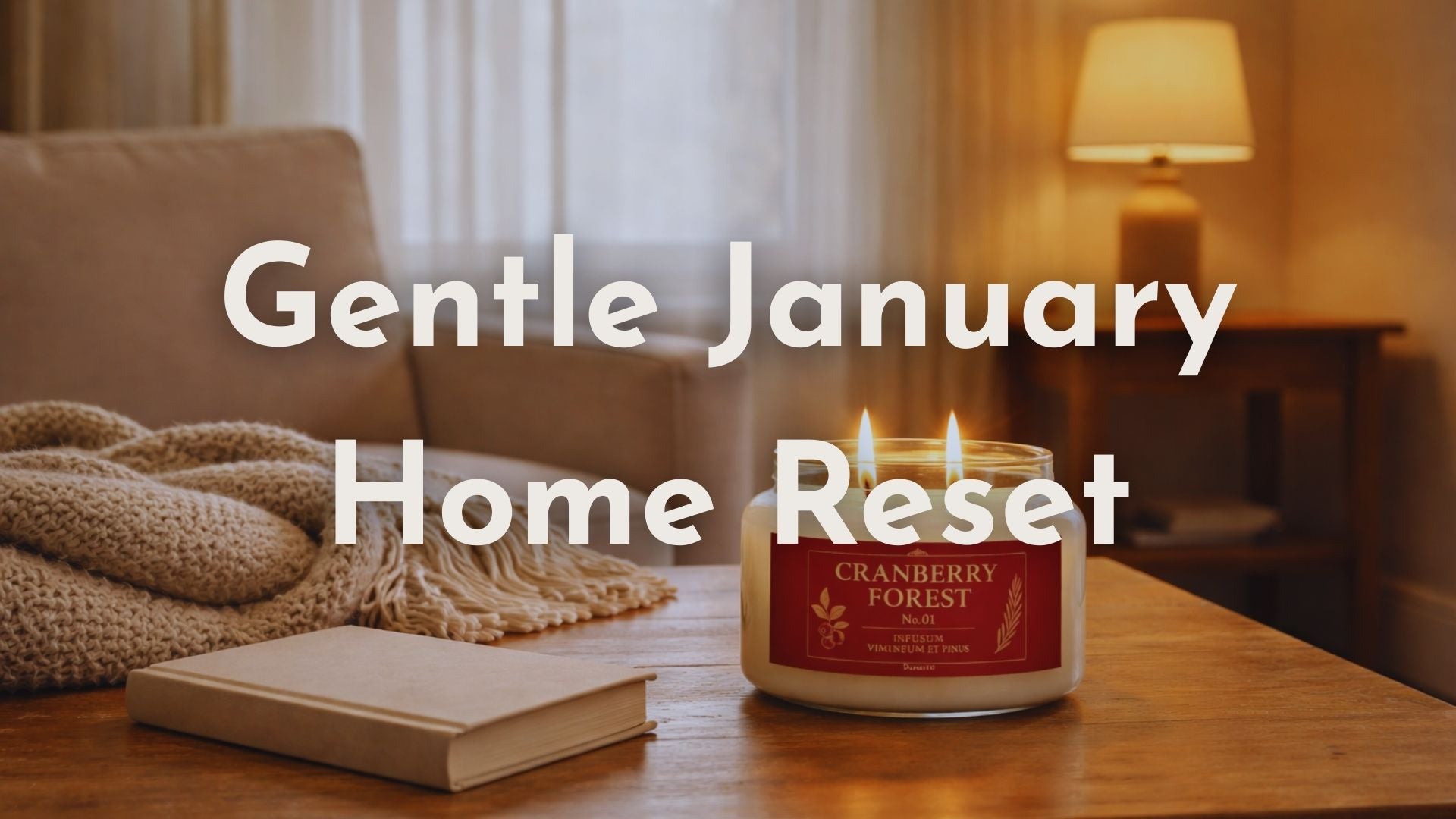
A gentle home reset in January means restoring calm in your space through small, comforting changes, without the need for decluttering, strict routines, or productivity goals. It’s a soft return to what helps you feel steady: warm light, familiar scent, and a few mindful choices that make your home feel peaceful again.
January doesn’t need to be a “new you” season. It can be a quieter one. The kind where you re-center your home emotionally. Without stripping away the warmth and personality that make it yours.
Key Takeaways
- A gentle home reset works best when you reset feelings, not rooms.
- Pick one calm cue per space (light, scent, or texture) and repeat it.
- Mindful rituals, especially evening candle rituals, help your home feel grounded and safe.
If you want an easy ritual anchor, candles are perfect because they change both mood and sensory atmosphere quickly, without asking you to redo your home. (That’s exactly why we recommend them as gentle grounding support.)
View our curated grounding scented candles.
What makes a gentle home reset different from a “fresh start”?
A “fresh start” usually comes with pressure: do more, fix more, improve more. A gentle home reset is the opposite. It’s not a project. It’s climate change, like turning the volume down.
You’re not trying to reinvent your home. You’re helping it support you.
Calm home reset ideas for January that don’t feel like decluttering
January calm isn’t created by emptying your shelves. It’s created by lowering friction, those tiny moments that make your body tense without you realizing it.
Here are a few calm home reset ideas you can do in under 10 minutes that keep your home cozy and lived-in:
- Swap overhead lighting for a lamp or warm-toned bulb in the evening.
- Create one “landing spot” for daily items (keys, wallet, lip balm)—a small tray is enough.
- Refresh one comfort surface: fold a throw, fluff a pillow, smooth the duvet.
-
Add one sensory anchor to a common space: a candle, a match jar, or a small dish for rings.
That’s it. Notice what’s missing? No “purge.” No “get rid of.” No “organize your entire life.”
Imagine walking into your living room after a long day and feeling your shoulders drop, not because it’s spotless, but because the room meets you gently. The lighting is softer, the air smells familiar, and your favorite corner looks like it’s waiting for you.
Slow living at home or mindful home rituals that feel cozy and realistic
Slow living can get misunderstood as doing less. Harvard Health frames it more as engaging fully with fewer things, being present with what’s in front of you, something that supports stress reduction and feeling more grounded in daily routines.
In January, slow living at home looks like this: choosing rituals that create steadiness, not rules you can’t maintain.
Try one of these mindful home rituals (pick one that feels easy, not aspirational):
1) The “first light” ritual (morning calm)
Before you open your phone, turn on a lamp or open the curtains. Let your home greet you first.
2) The “evening signal” ritual (reset your nervous system)
Light a candle at the same time each evening, when you start dinner, when you shower, when you change into cozy clothes. You’re training your brain to recognize: we’re safe; we’re slowing down.
3) The “one-room return” ritual (5 minutes)
Choose one room you want to feel softer: the bedroom, the living room, or the bathroom. Do one small act that improves the mood: straighten the bedside, wipe the counter, fold the throw. Stop there.
4) The “quiet pause” ritual (2 minutes)
Sit down with your candle lit and take ten slow breaths. Not to “be productive.” Just to exist in your space without rushing.
If you want an easy ritual anchor, candles are perfect because they change both mood and sensory atmosphere quickly, without asking you to redo your home. (That’s exactly why we recommend them as gentle grounding support.)
Find your ritual anchor in our Candle Collection.
About the source: Harvard Health — Taking it slow
Creating a peaceful home when your mind feels loud
Creating a peaceful home doesn’t mean your life becomes peaceful overnight. It means your home stops adding pressure to your day.
A peaceful home is built from repeatable cues that tell your body, “You can exhale here.”
The 3 cues that create peace (without changing your style)
Light cue: soft, warm lighting in the evening
A single lamp can shift a whole room’s emotional tone.
Scent cue: one calming signature scent
When you return to the same scent regularly, your brain links it with safety and slowing down.
Texture cue: one “soft landing” item per room
A throw blanket, a robe, a pillow you actually use, something that invites your body to relax.
“Peace isn’t a perfect home — it’s a home that lets you breathe.”
A gentle January reset you can repeat all month
If you want a simple rhythm that doesn’t turn into a project, use this:
The 7-Day Gentle Home Reset (no pressure, no productivity framing)
- Day 1: Reset one sightline (the first place your eyes land).
- Day 2: Add a soft lighting cue for the evening.
- Day 3: Choose one mindful ritual you’ll repeat.
- Day 4: Create a tiny landing spot for daily essentials.
- Day 5: Refresh one comfort surface (throw, bedding, pillows).
- Day 6: Light a candle and sit for two quiet minutes.
- Day 7: Repeat the one change that made you feel the most calm.
This is the whole point: you’re listening to your body’s response and choosing comfort, not chasing a finish line.
Candle ritual: grounding support for a gentle home reset
If your reset needs an anchor, let it be scent.
A candle ritual is small enough to be realistic and powerful enough to shift the emotional atmosphere of a room. Light it when you want to mark a transition: work to rest, busy to quiet, noise to calm.
Do I need to declutter to do a gentle home reset?
No. A gentle home reset focuses on emotional calm, warm light, soothing scent, and small friction-reducing changes. Your home can stay cozy and lived-in.
What’s one calming reset I can do in five minutes?
Reset one sightline: soften the lighting, fold a throw, and add a candle to that visible corner. Your brain will read the whole space as calmer.
How is slow living at home different from “doing less”?
Slow living is more about engaging fully with fewer things, being present with what you’re doing instead of rushing through it. Harvard Health notes this mindset can help you feel more grounded in your daily routines.
About the Source We Used
Harvard Health explains that slow living isn’t about doing less, but about engaging more fully with fewer things, supporting a more grounded, less stressed daily routine.
Shop the Ritual
If you’d like to turn this reset into a nightly ritual, start with scent and soft light.
About Durazza
Written by Durazza Editorial — a cozy home décor brand focused on calm, intentional living through scent, comfort, and emotionally warm styling. Our content is designed to help you create a peaceful home with realistic, repeatable rituals that support everyday wellbeing.