
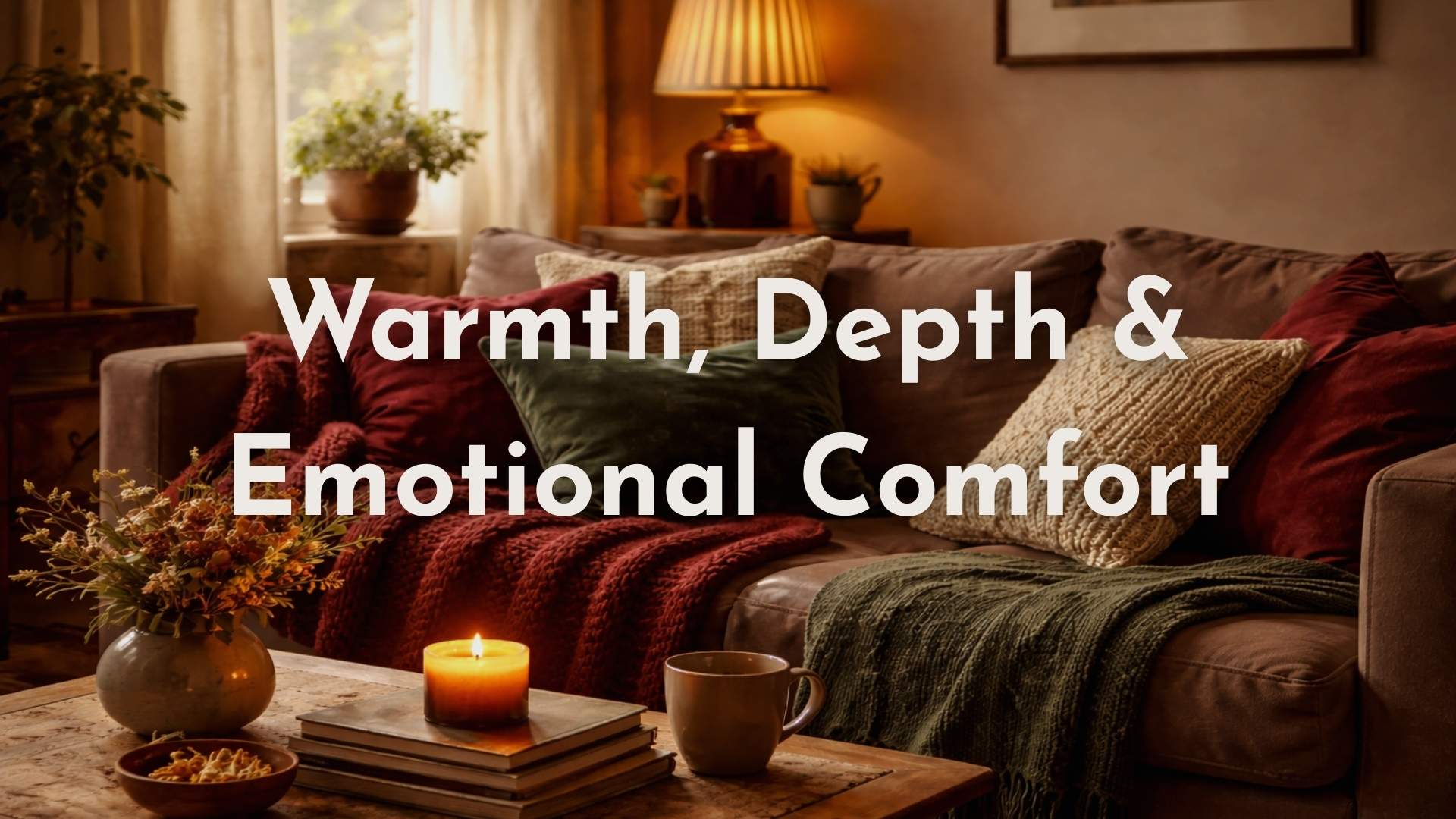
Moving away from gray interiors reflects an emotional shift, not a passing design trend. Many homes are trading flat, cool gray palettes for warmer, richer depth because it feels more inviting and emotionally grounding, supporting comfort, mood, and a sense of lived-in calm.
Gray had its moment for a reason. It felt clean, modern, and safe. But when it becomes the main character in a home, walls, floors, upholstery, and even décor, it can start to feel distant instead of soothing. What’s changing now isn’t that people “hate gray.” It’s that we’re craving rooms that hold us with warmth.
Key Takeaways
- Gray isn’t disappearing... It’s losing emotional dominance.
- Warm color palettes for interiors can feel quieter than gray when layered with depth.
- Color psychology in home design helps explain why warmth feels more inviting and grounding.
- Creating emotional warmth at home often starts with light, scent, and texture, before paint.
If you want a low-commitment way to add depth to a space, start with mood anchors such as blankets, pillows, and candlelight, so the room feels warmer without needing a full redesign.
Browse the Gothic Home Decor Collection for grounding ritual support
Why are we moving away from gray interiors?
The shift away from gray interiors isn’t really about “what’s in.” It’s about what feels emotionally supportive. After years of stress and overstimulation, many of us want homes that do more than look neutral; we want spaces that help us feel settled.
A room can be visually calm and still feel emotionally cold—especially when cool gray is the dominant tone.
Gray reflects light without holding much warmth. In living rooms and bedrooms, that translates into spaces that feel flat, unfinished, or a little far away, especially at night under cooler bulbs. The fix isn’t to purge gray. It’s to soften it with warmth and depth so the space feels more human.
How color psychology in home design explains this shift
Color psychology in home design helps explain why warmth is in right now. Design sources such as The Spruce note that warm colors tend to feel more inviting and emotionally grounding, while cooler tones can create a sense of distance, especially when used heavily in a space.
This is why many homes are moving away from flat gray interiors: warmth reads as welcome.
When a home leans too cool, gray walls, gray floors, gray seating; everything can start to feel visually “correct” but emotionally muted. Warmer undertones and deeper hues add presence. They don’t have to be loud. They have to feel lived-in.
Warm color palettes for interiors don’t have to be bold
Warmer palettes don’t automatically mean bright, busy, or overwhelming. In many cases, warm color palettes for interiors feel quieter than gray because they create a sense of visual “holding.” Depth absorbs light instead of bouncing it back.
Think: depth over brightness, rich undertones, softened contrast, and texture that makes color feel gentle.
Where to add warmth first (without repainting)
- Textiles: a blanket in a deeper tone instantly changes the room’s emotional temperature.
- Soft structure: pillows add warmth through color, shape, and texture.
- Lighting: warm bulbs and lamps reduce that “cold gray” feeling at night.
- Scent: candles deepen the mood without changing your décor at all.
If you’re drawn to jewel tones, treat them as a direction, not a rule. A single deep accent (a warm burgundy, forest green, deep blue, or amber) can bring emotional depth without overpowering your home.
Creating emotional warmth at home through depth, not perfection
Creating emotional warmth at home isn’t about following a palette chart. It’s about how your space responds to you, especially at the end of a long day.
The “emotional warmth” checklist
Light feels soft: lamps over overheads in the evening.
Texture invites touch: something cozy within reach (blanket, pillow).
Scent signals calm: a candle ritual that marks the shift from busy to restful.
“Warmth isn’t a color — it’s how a room holds you.”
Gray can still belong in this story. The difference is that it stops being the entire story. When gray becomes a supporting neutral instead of the main mood, the home starts to feel softer, without losing your style.
How to move away from gray interiors gently (without replacing everything)
If your home is already built on gray, you don’t need to start over. You can shift the feeling of your space with small, emotionally meaningful changes that add depth over time.
Start with one room and one “anchor”—a blanket, a pillow, or candlelight—then repeat the feeling.
- Add a deeper-toned throw where you unwind most often.
- Layer pillows with warmer undertones (even if they’re neutral).
- Switch one bulb to a warmer glow and see how the room changes at night.
- Use candlelight as your evening cue that your home is a resting place.
Shop the Mood (not the trend)
If you’re craving warmer depth, focus on mood anchors that make a space feel emotionally grounded, soft blankets, textured pillows, and candlelight that settles the room without shouting for attention.
Browse the Gothic Home Decor Collection for grounding ritual support
Tip: Use one deeper accent in a “sightline” you see daily to make the whole room feel warmer.
Does moving away from gray interiors mean gray is “out”?
No. Gray can still be a beautiful neutral. The shift is about balance, adding warmth and depth so gray doesn’t make the space feel emotionally flat.
What’s the easiest way to warm up a gray room without painting?
Start with textiles and light: a deeper-toned blanket, a textured pillow, and warmer evening lighting. Candlelight is a simple mood anchor that adds warmth fast.
Are jewel tones the only option for warmth?
Not at all. Warmth can come from earthy neutrals, softened golds, warm whites, and deeper undertones. Jewel tones are a direction, use them gently, one accent at a time.
About the Source We Used
The Spruce explains how warm versus cool colors influence the feeling of a space, noting that warmer tones often read as more inviting and grounding, meanwhile cooler tones can feel more distant, helping clarify why many homes are shifting away from flat gray dominance.
About Durazza
Written by Durazza Editorial — a cozy home décor brand focused on calm, intentional living through comfort, scent, and emotionally warm styling. Our content is designed to help you create a home that feels grounding and supportive, with mood-forward guidance that prioritizes lived-in ease over trend pressure.